


Alliance @ Santa Fe 2014 Summary Report
The Alliance for Artisan Enterprise’s annual conference in Santa Fe this July was our second since our founding in November 2012 and it was a great pleasure to see our collective progress. Despite a sudden change in venue from Morningstar Ranch to La Posada de Santa Fe Hotel due to inclement weather, the Alliance Team was eager to welcome the Alliance and kick off our biggest event of the year.
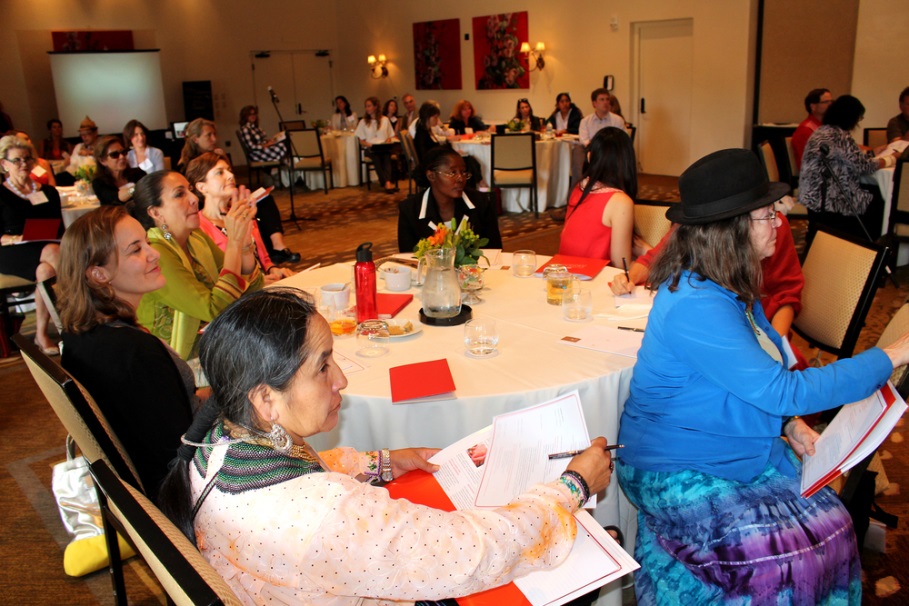
The Alliance for Artisan Enterprise’s annual conference in Santa Fe this July was our second since our founding in November 2012 and it was a great pleasure to see our collective progress. Despite a sudden change in venue from Morningstar Ranch to La Posada de Santa Fe Hotel due to inclement weather, the Alliance Team was eager to welcome the Alliance and kick off our biggest event of the year.
Day One
The conference began with a lunch and introduction by Alliance director Peggy Clark to the 60+ participants who traveled to the meeting from all over the world, ranging from corporate representatives of The Coca Cola Company, Walmart and Eileen Fisher to local artisans from the folk market. Peggy then discussed the impact of the Alliance to date from results of our impact survey.
Next, Peggy introduced the first speaker and Alliance partner, Carlos Pierre, Manager of Strategic Initiatives at Kiva, the world’s first online lending platform. A non-profit organization, Kiva’s mission is to use microfinance—as little as $25 loans—to empower people to discover opportunity and alleviate poverty in the world. This loan system is evidence of the Alliance directly supporting artisan businesses by bringing capital to the sector. The Alliance is thrilled to have the privilege of partnering with Kiva, which will allow our members to have access to a trustworthy loan system that values relationships.

For the afternoon, participants attended one of three Deep Dive conversations of their choosing. The Alliance was fortunate to welcome a wide range of experts who brilliantly led the conversations.
Design Interventions That Work, Cynthia Lawson
Cynthia cofounded and runs a research lab, Development through Empowerment, Entrepreneurship, and Design (DEED) at the Parsons School and is also the Associate Provost at The New School. Her vision is to create more equitable artisan enterprises, blurring the line between “artisan” and “designer”. Her session explored methods to support artisans in emerging economies, run collaborations between university students and artisans, and create outside-of-the-classroom learning opportunities for scholars. The group discussed questions such as “Should I give the artisans my designs or let them only use their own designs?” and “How do you define a new vs old tradition?”
Artisan Enterprises: Challenges and Pathways to Scale, Karen Grossman
Karen was the former vice president of Social Innovation at Mercy Corps. Her sessions discussed the different ways to scale artisan businesses, in social impact, in sustainability, and in production increases. Karen and the group discussed examples of ways to achieve scale- through product scale-upm organization scale-up, and scale impacts at the industry level. Led by Karen, the group discussed the different meanings of scale and shared their own meaning of change.
The Faces of Trade: Designing a Communications Campaign to Make Trade Policy Work for Artisan Businesses, Shari Berenbach & Lyndon Haviland
Shari is the President and CEO of US-Africa Development Foundation. Lyndon is the on the Global Health and Development Board at the Aspen Institute and runs Haviland consulting. Their session explored ways to strategically tackle the African Opportunity for Growth & Opportunity Act (AGOA) re-authorization on behalf of artisans and how to develop a public education campaign that would help to make the case for AGOA support of artisan businesses.
In the afternoon, a plenary panel discussion on “The Challenge of Scaling Up to Meet the Global Marketplace: True Stories of Sourcing, Marketing, and Everything in Between” was featured. Peggy moderated the panel featuring Jackie Duff from the Coca-Cola Company, Gina Lopez from Walmart, and Amanda North from Artisan Connect. Jackie Duff introduced Coca Cola’s 5by20 campaign and explained how artisans are an important part of the company’s value chain. Next, Gina Lopez shared Walmart’s Women’s Economic Empowerment initiatives. Lopez stated the question and goal that Walmart is pursuing “How can we create access to global markets for small women owned businesses?” Lastly on this panel, Amanda North shared her background and inception of her company, Artisan Connect. Amanda revealed the challenges she has seen in connecting artisans with the global marketplace as a startup web platform.
Emily Green of Green Design Link asked Gina Lopez “How do you deal with the logistics issues when dealing with artisans? Walmart is known for being strict.” Gina responded that Walmart has a team working on logistics and is creating community centers that empower women and that can pass Walmart’s regulations for a safe working environment. Megan Macdonald of Sasa Designs by the Deaf shared that for her, sourcing, rather than finding buyers, is her biggest challenge. In response to this statement, Gina disclosed that Walmart has a supplier academy that provides training. Further, the company has started an accelerator program that is hosting a one week intensive program that invites artisans to come to Arkansas to learn how to work with Walmart. She also informed the audience that Walmart has mentoring programs and an internal women owned businesses advisory council. Jackie Duff responded that Coca Cola has many training programs and training materials are available for all women that 5by20 works with, especially in areas with illiteracy.

The day drew to a close with a reception and an impromptu outdoor market in the courtyard under the trees. Our team had the honor of presenting the 2014 Alliance Hero Award to Nilda Callañaupa Alvarez, Founder of the Center for Traditional Textiles of Cusco (CTTC). Nilda shares with her guild of 650 weavers in the Peruvian highlands the skill of using natural, non-synthetic pigments to dye their wool. Together, CTTC works to revive weaving techniques near extinction and keep the long tradition of weaving alive and thriving in their communities.
Day Two

The second day began with a plenary session featuring three innovators: Amy Hall from EILEEN FISHER, Nina Smith from Goodweave, and Natalie Mundy from Sahalandy. The topic was “Where Values Meet Markets”.
Amy Hall spoke on the mission of EILEEN FISHER. She mentioned manufacturing, social, and environmental challenges that artisans must work together on to overcome. Their current initiatives involve projects in India, Peru and Ethiopia to provide women-owned business grants. She informed the audience that only 3% of global clothing production is made in the USA and that Eileen Fisher produces 22% of its clothing in the USA.
Nina Smith is the Executive Director of Goodweave, a non-profit organization that aims to stop child labor in the carpet industry. Nina spoke about promoting decent working conditions, wages, working hours, safety, and humane treatment. Goodweave provides rehabilitation facilities and educational centers along with health clinics and daycares.
Natalie Mundy is the Founder and Director of Finance & Operations at Sahalandy. She presented a New School report that researched and assessed the value and worth of a certification model.
Following that presentation, Alliance consultant Simon Ellis presented his research findings on the scope and impact of the artisan sector – a project funded by the Alliance. Simon asserted that the common belief that no country has craft statistics is misleading. He strongly advocated for acquiring data and evidence that crafts can change lives, and presented preliminary data on the scope of the sector. To view this report, please login here using password alliance2012.
During lunch the second day, participants were organized into several small “cluster conversations” in which participants could converse with each other on topics they had expressed interest in. The conversation titled “Social Impact Compliance” was led by Kaylynn Jordan for ESNet, who mentioned that the group decided to move forward using the social impact compliance work already started by Nina Smith of Goodweave and Emily West of The West Foundation. They concluded that the first step would be to create a declaration or statement that establishes ethical standards specific to artisans and also matches with global marketplace expectations. This group has continued working together on this initiative since the meeting.
In another cluster conversation, Carlos Pierre, of Kiva, guided a group called “Kiva and Artisans”. He said there were three take-away messages from this exchange that tapped into larger business issues:
- Create a Hackathon to meet the need of the artisan sector for solving basic IT problems. If there was an App which would allow artisans to bundle shipments from a similar area going to a similar destination, there could be massive cost savings, but communication between artisan organizations in the same region is limited.
- Partnerships with large shipping countries. For example, getting space on Walmart containers and then getting Fedex or UPS to help with the last mile distribution in the US. Aggregation of Artisan Alliance members efforts should allow for at least preferential rates.
- Developing a Code of Conduct - while not mandatory, it would help clarify to some what it means to be an Artisan Alliance member. Using on-line tools (google docs and google forms) to source feedback from members and develop some core principles that everybody can agree to.
Lastly, the final plenary session of the conference, “Vision and Values: Building Artisan Businesses that Make a Difference” featured Joy Ndungutse of Gahaya Links, Monica Garry from The Bridge Fund, and Alycia Kellman from Grassroots Business Fund.
Joy spoke on her experience as a woman in the Rwanda genocide and the profound healing that occurred as a result of the community producing artisan work together. Monica shared the vision of The Bridge Fund, an organization that supports over 300,000 Tibetans in China. The Bridge Fund has established two Tibetan nomad cooperatives to provide a platform for economic development and works to preserve cultural tradition and identity. Alycia discussed the work of the Grassroots Business Fund in growing viable businesses in Africa, Asian, and Latin America. One of its clients, Jaipur Rugs, is one of the largest manufacturers of hand-made carpets in the world. GBF has reached over 40,000 people working in this social enterprise in India and witnessed over 26% growth in revenue over the past four years.
In closing, Peggy invited select participants to share “6 Great Ideas” from their perspective of the conference. Six Alliance Members answered the question “What is one great idea you are taking away from the conference?”
- Bring university students to the artisan field and pay artisans a university salary to teach the students. – Nina Weissberg, Weissberg Foundation
- Leverage contacts at the Aspen Institute and use that network and brand for good. – Catherine Shimony, Global Goods Partners
- Create a communications and public education campaign to support the work of artisans, “The Enchantment of Being Uniquely Human”. – Shari Berenbach, United States African Development Foundation
- Network strategically to combat the inaccessible and expensive nature of shipping. – Nilda Callanaupa, Center of Traditional Textiles of Cusco
- Continue to host gatherings for artisans to share best practices, understand collective struggles, and take pride in who we are and what we do. – Rangina Hamidi, Kandahar Treasures
- Celebrate diversity and use it to our strength, each diverse approach presents its own difficulties. We can use these different approaches for our collective strength in this new economy. – Kythzia Barria, Innovando la Tradicion/Colectivo 1050
What a wonderful two days! We walked in with expectant ears and excited voices, and came out with a better understanding of the shared struggles and triumphs of elevating the artisan sector. The conference may be over, but the discussion is not. Comment below to let us know what you think, and what you would like to see next year! Don’t forget to follow us on Instagram and Twitter @allianceartisan
UNHCR: Refugee Artisans in Lebanon
Ms. Shalini Mehan, Livelihoods Consultant from our new member the United Nations High Commissioner for Refugees (UNHCR), recently came down to D.C. and presented the UNHCR innovative project which focus on the intersection of arts and peace building, specifically with Syrian refugees in Lebanon. Ms. Mehan’s passion for this field comes from her experience of living and working in the Middle East, where she started her own design project in Jordan for a couple years and worked with artisans in Damascus. She met most of these artisans simply by going to the villages and visiting them.
As the summer intern for the Alliance for Artisan Enterprise, I’ve had the privilege of meeting and speaking with individuals and organizations who are passionate about elevating the artisan sector. One particular conversation challenged me to think about how to address the countless political and social conflicts that besiege artisan livelihoods.
Ms. Shalini Mehan, Livelihoods Consultant from our new member the United Nations High Commissioner for Refugees (UNHCR), recently came down to D.C. and presented the UNHCR innovative project which focus on the intersection of arts and peace building, specifically with Syrian refugees in Lebanon. Ms. Mehan’s passion for this field comes from her experience of living and working in the Middle East, where she started her own design project in Jordan for a couple years and worked with artisans in Damascus. She met most of these artisans simply by going to the villages and visiting them.
Ms. Mehan briefed us on the current situation in Lebanon within the Syrian crisis and on the UNHCR artisan project.. Here’s what we learned:
Lebanon is a country of 4 million and is host to an additional 1.1 million Syrian refugees. There are no refugee camps, so refugees reside throughout Lebanon. Syrian refugees are also hosted in Turkey, Egypt, and Jordan. Globally, 50% of refugees are urban, and the average number of years that a refugee stays in his/her host country is a staggering 12 years.
As noted above, UNHCR has a million registered refugees in Lebanon. It records data about their skill set and what they did at home for a livelihood. An overwhelming number of the refugee population in Lebanon are women, children youth (women and children constitute around 80% of the refugee population), and female-headed households (30.5% of the refugee population).over (86,000) self-identified as artisans.
The sheer mass of these refugees presents many challenges for a host country. A particular challenge in this context where one out of every four people in Lebanon is a refugee is the ability to earn an income. In Lebanon, 72 sectors of work are deemed by the government as areas for Lebanese citizens only. Despite Lebanon not being a signatory to the Refugee Convention, Lebanon has not only provided a haven for refugees but allows access to health, education and certain jobs (including for artisans).
Despite the obstacles piled up in front of her work, UNHCR remains optimistic that there is hope and a place for the arts to go hand-in-hand with social-cohesion Here are a few of UNHCR’s goals with this project:
1. Create a sustainable market for local artisan work that also includes refugees, which would help them out of isolation and into the workforce.
2. Identify different value chains and what is viable on a global market, all the while doing what is ecological, simplified, mass-producible, and inclusive of local communities.
3. In a culture that is often more conservative, , UNHCR hopes to organize work for women at home, noting that most women have grown up learning how to fantastic embroidery.
4. Forge partnerships with development actors and in doing so getting refugee livelihoods on the development agenda. Demonstrate the possible value-added of refugees to host country economies. . Ms. Mehan emphasized that Syrian refugees are people who offer real skills and valuable professions.
Artisans are working with the Lebanese, side by side, in a true gesture of easing the tension between the two communities and crafting a livelihood from their own hands.
Written by: Andrew Shi

Made in the USA: Potter David Norton
The Alliance and its members work in over 110 countries of the world, but that doesn't mean the United States isn't one of them. The Alliance has been looking for opportunities to connect with artisans in the states, to understand their challenges and share their stories. I was of course thrilled when I found a Washington Post article featuring David Norton, a self-taught potter from Virginia. Read below to hear more of his story.
By: Andrew Shi
The Alliance and its members work in over 110 countries of the world, but that doesn't mean the United States isn't one of them. The Alliance has been looking for opportunities to connect with artisans in the states, to understand their challenges and share their stories. I was of course thrilled when I found a Washington Post article featuring David Norton, a self-taught potter from Virginia. Read below to hear more of his story.
1. What/who inspired you to take on pottery?
Being a potter was not a childhood dream. I studied journalism at Ohio University, and after graduation, worked in public relations and marketing. Then, I got fired. Making pottery was something I could do to provide for my family.
2. You had to make sacrifices, didn’t you?
Of course. Even today, at 64 years old, I live in a log cabin without cable and a smartphone. My neighbors have way more cash than I do; in fact, Loudoun County is one of the richest counties in America. I’ve made choices in my life to cut back on things, and I love knowing that I can motivate myself to provide for my family. Since my first day as a potter, I’ve set goals for myself every week. That’s just how I’ve adjusted to my surroundings.
3. What does it mean to be an artisan in the 21st century?
Going back six thousand years ago, before plastic came along, a potter was the most necessary guy in the community. You needed pottery to store grain over the winter to use daily as jars and bowls. Making pottery was a source of commerce, and the potter was pretty popular up until 350 years ago. That’s all changed name with plastic and machinery. Today, it’s about making a living, appealing to people who still appreciate, for example, eating from handmade pottery for its aesthetic experience.
4. Do you consider yourself an artisan?
People use that word for a craftsperson who puts individual personality in his/her work. I’m a craftsman, a blue-collared artist. If people think my work is art, then that’s great, but my first goal is to make a living. Being a self-taught potter, I didn’t have delusions about success.
5. But what about the art?
I’m a one man factory, and I don’t rush through any of my pieces. Each piece of pottery I make bears my signature and reflects my personal touch, and that’s art. There are a lot of arts schools in the nation today that are creating the atmosphere that creativity is what sells. They’re guilty of setting up students to fail. Things that people buy that are reasonably priced and worth selling over and over again—that’s what sells.
6. Should more people do what you do?
My students make bad versions of my work and sell it for half price [laughs]. Sure, it’s important to pass on the tradition, but even more important in any piece of work is personality and integrity. Good work needs to sing, speak, and serve.

Photo: David Norton

Photo: David Norton

Photo: David Norton
Learn more about David Norton and his Potterosa studio at http://davidnortonpottery.com/. If you are interested in artisan work, also check out the work of our members.

Renewing AGOA: A Call to Support Artisans
President of the US African Development Foundation and Alliance for Artisan Enterprise Advisory Board Member, Shari Berenbach, has released a statement calling on President Obama to make AGOA more supportive of artisans.
President of the US African Development Foundation and Alliance for Artisan Enterprise Advisory Board Member, Shari Berenbach, has released a statement calling on President Obama to make AGOA more supportive of artisans. Please read her call to action below.
Engaging Young African Leaders Who Are Africa’s Future
As part of the Washington Fellowship program, yesterday, President Obama joined 500 Young African Leaders in a town hall meeting to discuss leadership, entrepreneurship, youth empowerment, and trade issues. The Washington Fellowship is the new flagship program of President Obama’s Young African Leaders Initiative (YALI). The program identifies and supports young African leaders as they work to develop robust economies, strengthen democratic governance, and enhance peace and security across the continent.
During his Town Hall, President Obama discussed the Africa Growth Opportunity Act (AGOA) which is set to expire in 2015. This law, originally passed in 2001, was designed to spur economic growth in Africa through increased trade with the US. AGOA, by any standard has a mixed track record of success. President Obama indicated his support for the renewal of AGOA authorization, but he acknowledged that even with reduced or no tariff barriers, many countries ‘still have problems in terms of getting their goods to market.’ He indicated a number of challenges for AGOA, from infrastructure to financing.
As President and CEO of the US African Development Foundation, I welcome President Obama’s and Congressional support for the next phase of AGOA, and I agree that changes must be made for the US and Africa to realize the full potential of AGOA. Now is the moment to discuss, how modifications to AGOA can facilitate bi-lateral trade with Africa, home to 6 of the world’s most rapidly growing economies.
AGOA should be adjusted make it more supportive of Artisan producers and facilitate their access to US consumers. Globally, the artisan production is a $34 Billion dollar industry, and collectively that is the second largest employer in developing countries. The majority of artisans are women and small producers, supporting them would be an important building block for developing economies. With improved access to the US market – a flourishing artisan sector could transform the economic prospects of households and communities across Africa.
There is much that can be done, from opening AGOA provisions to hand made jewelry, leather goods or woodworks, (today it is mostly focused on textiles), to increased training and support to enable local artisans to more easily access US retailers, from Macy’s and West Elm to Walmart.
Like the President says, let’s adopt a new AGOA that helps African’s to ‘get their goods to market’.
Shari Berenbach
President & CEO
US African Development Foundation

Scaling Up Artisan Businesses: the Story of Sahalandy in Madagascar
Featuring Sahalandy as an exemplary case, The Alliance for Artisan Enterprise and Aspen Global Health and Development hosted a roundtable discussion on the impact of market access for artisan communities, addressing challenges and successes in the field.
Featuring Sahalandy as an exemplary case, The Alliance for Artisan Enterprise and Aspen Global Health and Development hosted a roundtable discussion on the impact of market access for artisan communities, addressing challenges and successes in the field.
Opening remarks by Greta Schettler, Senior Economic Policy Advisor for the US Department of State's Office of Global Women's Issues
Featured panelists included:
•Natalie Mundy, Director of Finance & Operations of Sahalandy
•Shari Berenbach, President of the United States African Development Foundation
•Closing remarks by Natika Washington, Director of Global Programs for the US Department of State's Office of Global Women's Issues
•Moderated by Peggy Clark, Alliance Director and VP of Policy Programs at The Aspen Institute
Check out an overview of the meeting on the Aspen Blog.

Alliance in the Field: Peru
During the month of April, the Alliance traveled to Peru for two Alliance events in Lima and to visit Alliance Member Center of Traditional Textiles of Cusco (CTTC). Kicking off the Alliance's work in Peru, Nilda Callanaupa Alvarez, Founder & President of CTTC, and one of her esteemed weavers, Maribel Quispe, shared their artisanal work

During the month of April, the Alliance traveled to Peru for two Alliance events in Lima and to visit Alliance Member Center of Traditional Textiles of Cusco (CTTC).
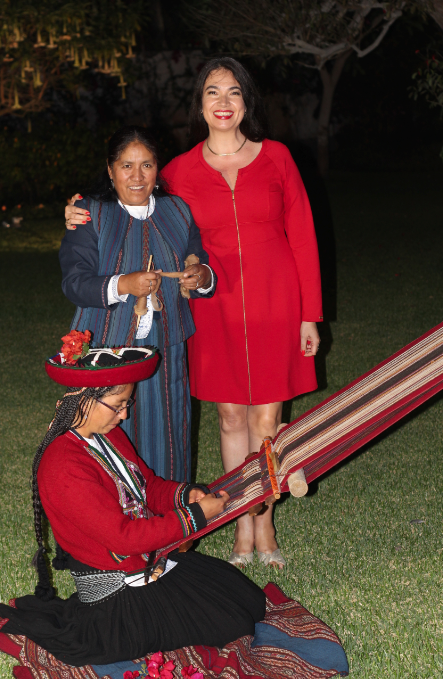

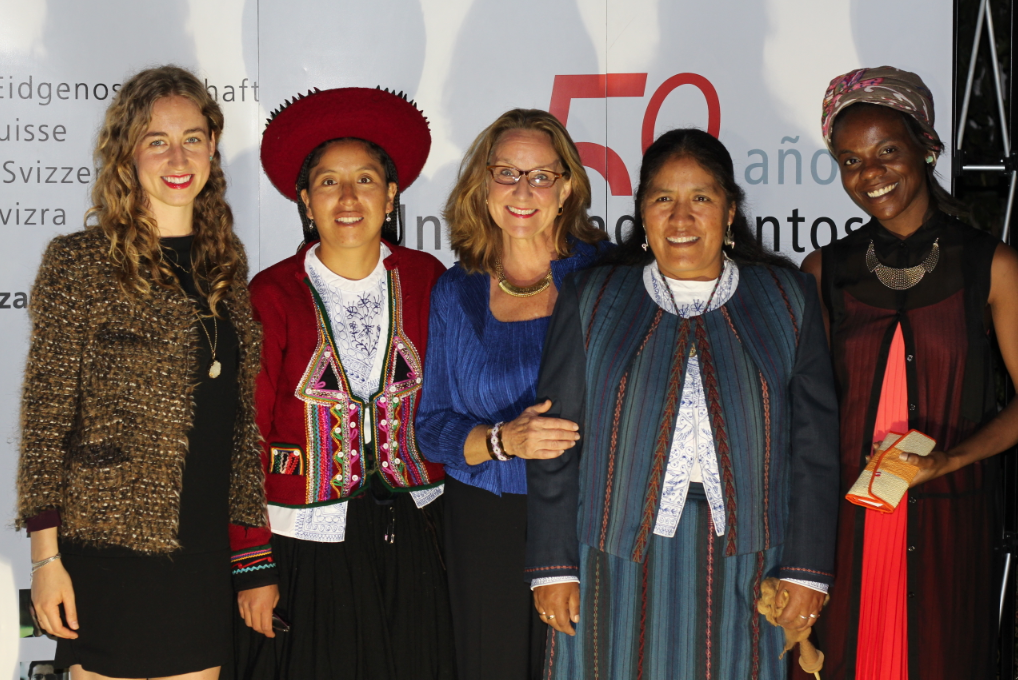

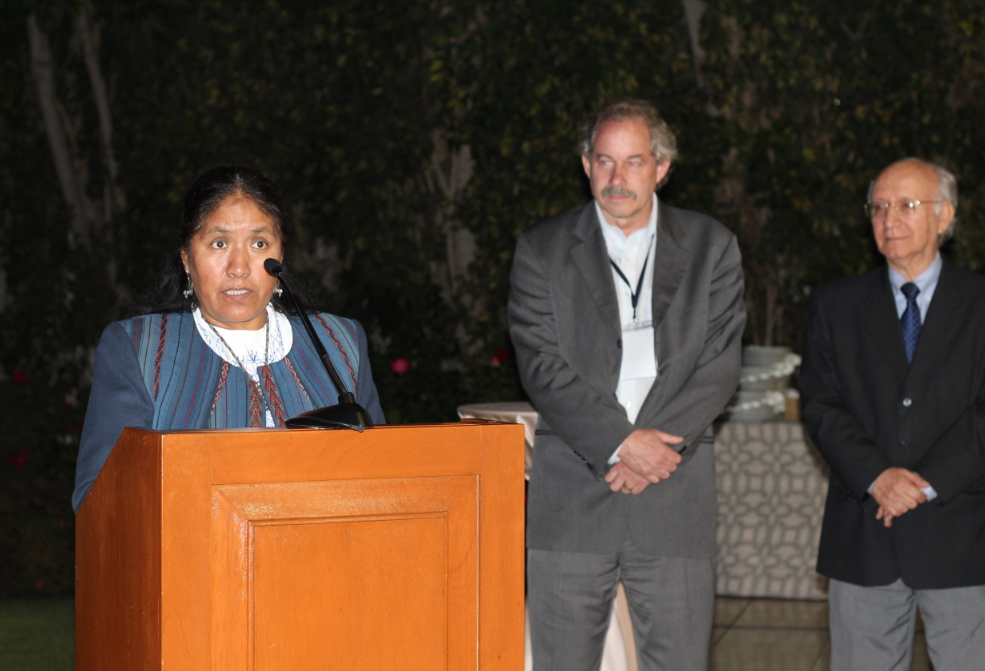

Kicking off the Alliance's work in Peru, Nilda Callanaupa Alvarez, Founder & President of CTTC, and one of her esteemed weavers, Maribel Quispe, shared their artisanal work and cultural history during a cocktail reception for the opening of Katoomba XX at the home of the Swiss Ambassador in Lima, Peru.
A snapshot of Nilda speaking to a crowd of distinguished guests at the home of the Swiss Ambassador of Peru. Her organization employs 650 weavers and has thousands of beneficiaries.
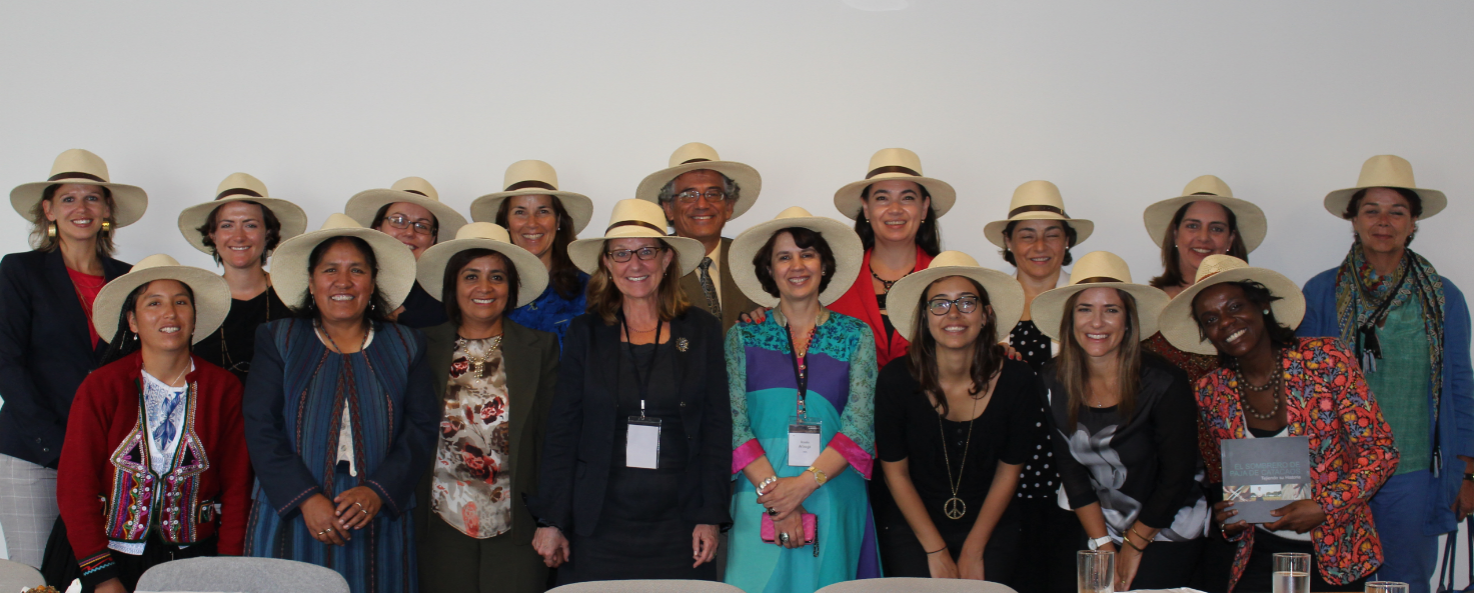
A Sense of Place: Sustainability and the Artisan Sector in Peru
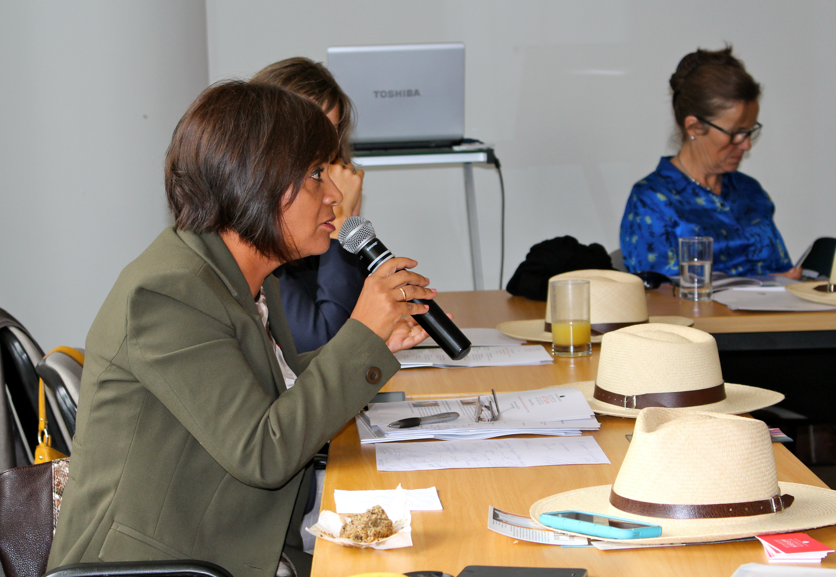
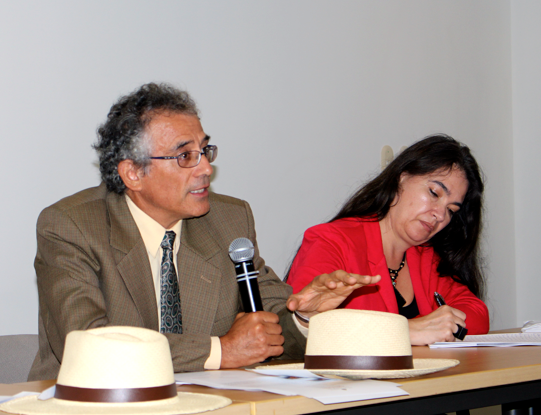
Alongside the Katoomba XX conference, the Alliance hosted a breakfast round table discussion A Sense of Place: Sustainability and the Artisan Sector in Lima, Peru. The round table featured notable guests from the craft and sustainability sectors in Peru. Alliance Members WeConnect International, CTTC and Green Design Link were present for the conversation.
Topics of discussion included the relationship between the artisan sector and the environment, creating sustainable value chains in the artisan sector, linking women entrepreneurs, leveraging sustainable design as an advantage in the face of globalization and securing the basic humanitarian needs of artisans. The round table discussion was fruitful in bringing together key leaders dedicated to supporting the artisan sector and resulted in plans for a forthcoming meeting during COP later this year. To read a detailed summary report of this event, click here.


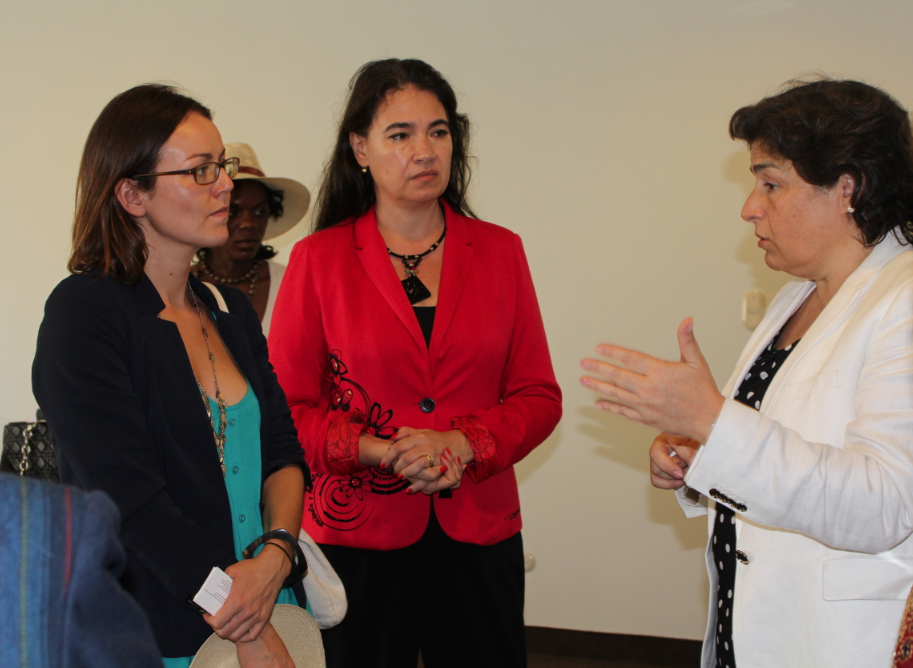

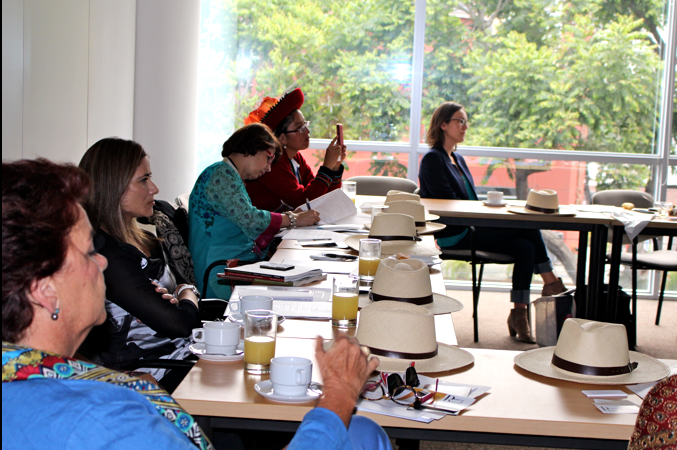
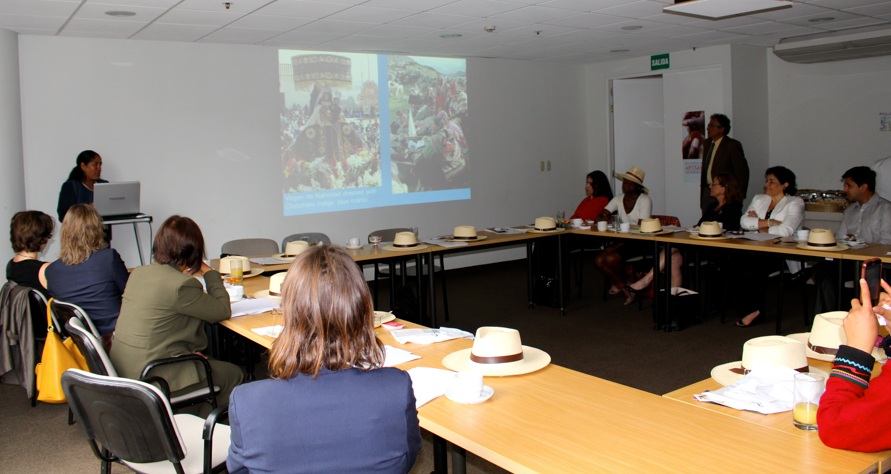
After the breakfast round table, the Alliance traveled with Nilda to Cusco to visit two of CTTC's weaving communities, Sallac and Chinchero.
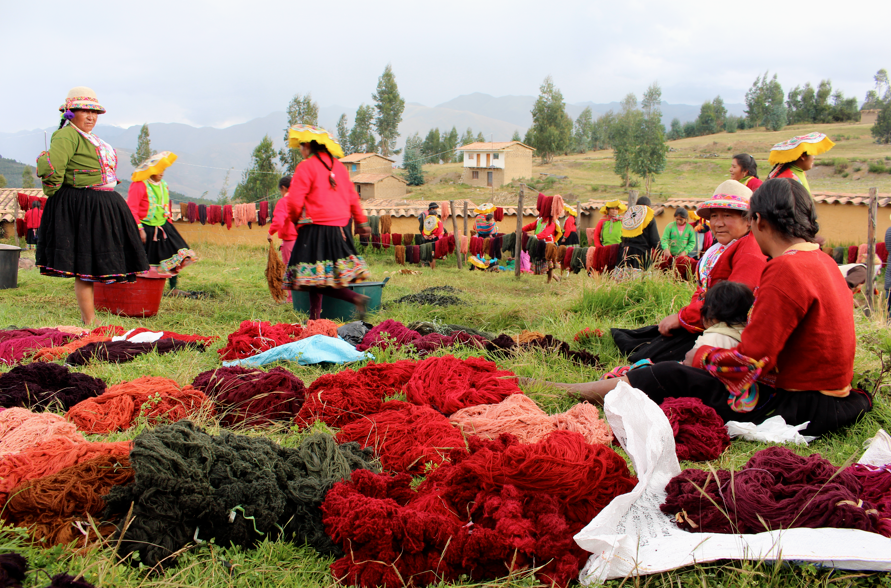

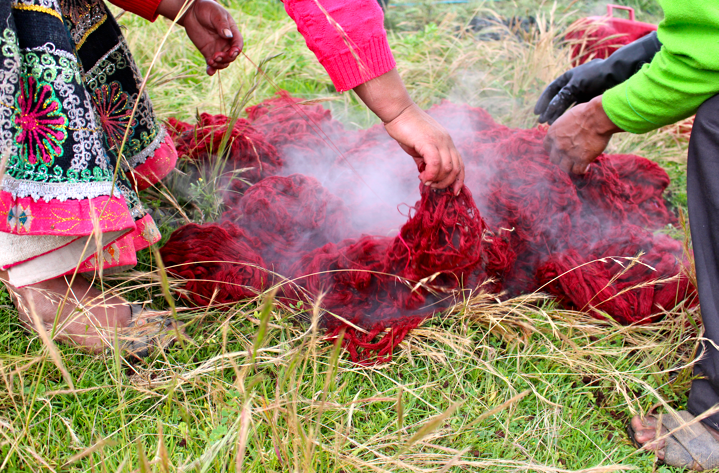

In Sallac, a mountain village an hour outside of Cusco, CTTC has brought together a guild of 50 weavers. Together, the community has revived almost extinct forms of weaving, Ikat and embroidery.

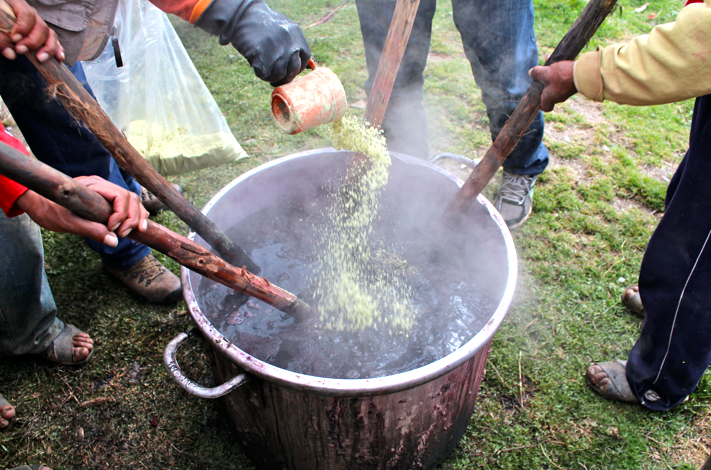
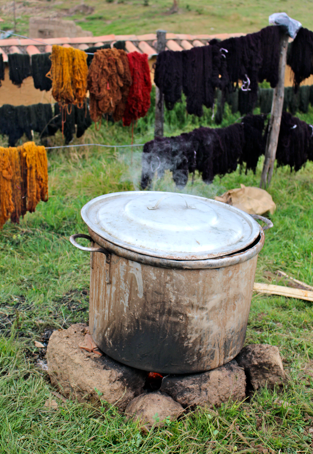
Nilda teaching her weavers how to dye alpaca wool using natural resources, like the cochineal insect.
The day that the Alliance visited, Nilda was conducting an alpaca wool dyeing workshop that began before the sun came out and ended in the evening. CTTC uses only natural dyes, an important distinction from the synthetic dyes that have become popular in Peruvian weaving and are known to have harmful effects on the environment. In each community, wool is dyed only three times a year.

Outside of CTTC's weaving center and store in Chinchero, Peru.
After a day of dyeing wool in Sallac, the Alliance traveled to Chinchero, where CTTC has a beautiful weaving center and store.

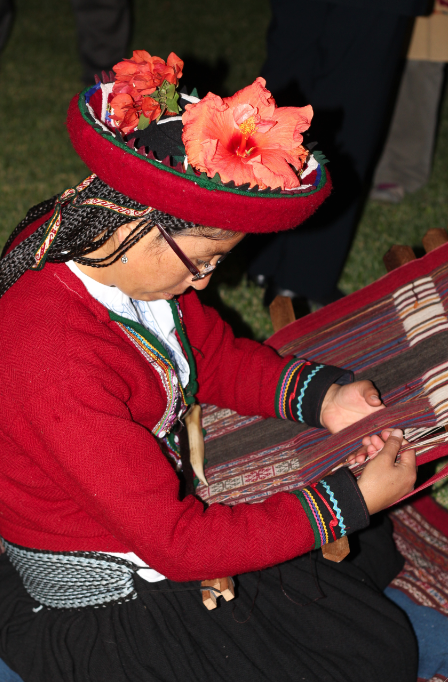
A CTTC weaver using her back strap loom.
In Chinchero, textiles are created on back strap looms. Artisans of CTTC create one to three highly detailed woven pieces each month.

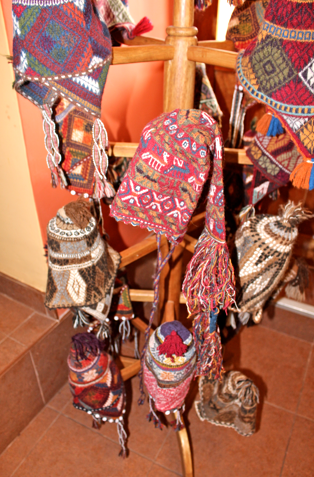


CTTC products can be purchased in stores across Peru, including their shop in Cusco and their museum and weaving center in Chinchero. Currently, CTTC is producing for Peruvian Connections and is interested in producing for more wholesale buyers.

Our journey to Peru was an incredible success! We are grateful for the opportunity to have connected so intimately with Alliance Members in Peru and look forward to continuing our work together to support the artisan sector.
All photos taken by Natalie Deuschle. Click here to see a roundtable report of our trip.

Alliance in the Field: Taiwan
The Alliance for Artisan Enterprise was invited by the U.S. Department of Commerce to speak at the Asia-Pacific Economic Cooperation (APEC) Workshop on Integrating SMEs into Global Supply Chains in Taichung, Chinese Taipei. The artisan sector is an important driver of economic growth, especially in the APEC region, and we were delighted to be part of the dialogue on how to integrate small and medium artisan enterprises into global value chains.


The Alliance for Artisan Enterprise was invited by the U.S. Department of Commerce to speak at the Asia-Pacific Economic Cooperation (APEC) Workshop on Integrating SMEs into Global Supply Chains in Taichung, Chinese Taipei. The artisan sector is an important driver of economic growth, especially in the APEC region, we were delighted to be part of the dialogue on how to integrate small and medium artisan enterprises into global value chains.
Day 1
Follow Peggy and Henna as they travel from Taichung to Taipei, stopping in Sanyi and Yingge to learn about woodcarvings and ceramics.
On March 24th, Alliance Director, Peggy Clark spoke on the unique trade barriers small and medium artisan enterprises face, and how, as a group we are helping each other to overcome those barriers. Later that day, our research fellow, Henna Wang shared her recent research on the involvement of women in the global economy and more specifically on women in the handicrafts sector. For women, while there are apparent challenges to access economic opportunities, there is also great potential if we consider women both as consumers and suppliers. According to the International Finance Corporation, women constitute approximately $28 trillion in global consumer spending in 2014. Forward thinking businesses can maintain a competitive edge by sourcing from women-owned SMEs and offering products that are better tailored to their clients.


Both Peggy and Henna’s presentations sparked relevant conversations with APEC delegates and other workshop attendees from the Philippines, Indonesia, Thailand, and the US. We invited them to continue the conversation at our breakfast meeting the next morning.
Day 2


Bright and early on Tuesday, March 25th, we co-hosted a breakfast roundtable with Lynn Costa and Daniel Miller from the U.S. Department of Commerce to discuss ways to unlock the potential of the cultural and creative industries in the APEC region. With support from the Taiwanese Ministry of Economic Affairs, we invited three speakers to share their experience in advancing the artisan sector in Taiwan. The discussion was enriched by perspectives from APEC SME delegates from Indonesia, Malaysia, Mexico, the Philippines, Taiwan, Thailand, and the U.S.

Mr. Keng-Hsiu Hsu talks about the multifaceted approach of NTCRI.
The first speaker, Mr. Keng-Hsiu Hsu, Director of the National Taiwan Craft Research and Development Institute (NTCRI) introduced the network of research centers that not only strengthen research in the handicrafts sector but also collect and preserve examples of the fine craftsmanship, train next generation artisans, organize competitions to encourage creativity, and participate in international salons to promote Taiwanese craft culture.

Mr. Wen presents the Alliance with a OTOP gift
Mr. Jong-Yuan Wen, Senior Specialist of the Management Consulting Division of the Small and Medium Enterprise Administration, Ministry of Economic Affairs, R.O.C. introduced the One Town One Product program in Taiwan and showed a dynamic video.
Inspired by Japan’s One Village One Product Program, the OTOP (One Town One Product) program in Taiwan is a community centered and demand driven regional economic development approach. Since 1989, the Small and Medium Enterprise Administration has been pushing forward the OTOP program to support the growth of local cultural industries. Learn more about the OTOP program in Taiwan.
Other countries have also established their own OTOP program, such as Thailand, Philippines, Malaysia, Vietnam, Cambodia, Pakistan, India, Bangladesh, and Indonesia, etc. According to Dr. Wimonkan Kosumas, as one of the first Asian countries to adopt the Japanese model, Thailand has also created its own One Tambon One Product program, now reaching 8,000 villages.

Ms. Hu introducing the "creative life industry"
Ms. Yo-Xin (Vivian) Hu, Manager at Corporate Synergy Development Center (CSD), explained the “Creative Life Industry,” a framework that fosters collaboration between the agricultural, manufacturing, and service industries to create an experience economy. The Taipei-based Corporate Synergy Development Center, which operates One Town One Product programs in communities around Taiwan, was commissioned by the Ministry of Foreign Affairs to carry out the program by providing advice on product, promotion, service and space or PS2.
We are thankful for the generous support of the APEC Secretariat, the U.S. Department of Commerce and the Ministry of Economic Affairs, R.O.C. for the opportunity to participate in the SME working group meetings in Chinese Taipei. We have come away with new ideas and new friends and are looking forward to building on the momentum that the group created to plan for future collaborations with APEC and its member economies.

Alliance Salon Series - Common Threads: Social justice and the runway
On February 3rd, in a private room filled with blue light glowing from the walls of the Hotel Mondrian Soho, the murmur of an excited crowd came to stillness. The hush signified the opening of the evening’s panel discussion, “Common Threads: Social Justice & the Runway”, moderated by Alliance Director, Peggy Clark with featured speakers Paul Van Zyl, Co-Founder and CEO of Maiyet and Rebecca van Bergen, Founder and Executive Director of nest.

Eve Blossom, founder of Lulan Artisans, chats with Meredith Duncan of musana Jewelry.
On February 3rd, in a private room filled with blue light glowing from the walls of the Hotel Mondrian Soho, the murmur of an excited crowd came to stillness. The hush signified the opening of the evening’s panel discussion, “Common Threads: Social Justice & the Runway”, moderated by Alliance Director, Peggy Clark with featured speakers Paul Van Zyl, Co-Founder and CEO of Maiyet and Rebecca van Bergen, Founder and Executive Director of nest. In true Aspen Form, the audience consisted of an eclectic mix of highly informed, civic-minded individuals interested in elevating the importance of the artisan sector.

The evening's panel: Peggy Clark, Paul van Zyl & Rebecca van bergen
Known as a pioneer of creating new approaches to human rights protection and promoting peace, Van Zyl launched Maiyet, a modern artisanal luxury fashion brand, in 2011. Maiyet works in conjunction with nest, a non-profit organization that is dedicated to training and developing artisan businesses. Van Bergen launched nest in 2006 after completing a Masters of Social Work. She was twenty four years old. When Clark asked Van Zyl and Van Bergen about Maiyet and nest’s partnership, Van Zyl shared his belief that “market success can’t solve all problems” and that the philanthropic sector should be respected in what it can do in “solving certain sets of problems that the market can’t solve.”

As the discussion opened to the audience, pressing questions surrounding the challenges of the artisan sector were raised. One issue brought to light was the difficulty that artisan enterprises face in creating products that can be sold at an accessible price point. “Let’s value skill” responded Van Zyl as he explained the possibility and proven success of giving artisans the responsibility of crafting luxury fashion. He urged the necessity in communicating the inherent correlation between value and skill− that products of high quality made with an expert skill set and precision to detail, simply can’t be sold for less than they’re worth.


Sass Brown proudly raises the copy of her forthcoming book Refashioned
Drawing the evening’s meaningful conversation to a close, Alliance Deputy Director, Katie Drasser, made a call to action, asking for the audience to “find one other person in the room and ask how you can help them”.

Alliance Deputy Director, Katie Drasser

Jennifer Gootman of west elm
“Common Threads: Social Justice & the Runway” is part of the Alliance’s salon series that promote a collaborative community within the artisan sector. For more information about Alliance events, please visit our events page.

Year One: Celebrating Our 1st Anniversary
To celebrate our very first anniversary, we've created a video to showcase the progress we've made and the aspirations that lie ahead. Alliance fellow Henna Wang had the opportunity to speak with Natika Washington, Director of the Office of Global Women's Issues at the US Department of State, to hear about the founding of the Alliance and its purpose in empowering women artisans of the world.

To celebrate our very first anniversary, we've created a video to showcase the progress we've made and the aspirations that lie ahead. Alliance fellow Henna Wang had the opportunity to speak with Natika Washington, Director of the Office of Global Women's Issues at the US Department of State, to hear about the founding of the Alliance and its purpose in empowering women artisans of the world.
Henna Wang: Why is the partnership managed by the Office of Global Women’s Issues, what is the role of women in the artisan sector?
Natika Washington: The Secretary’s office of Global Women’s Issues was approached by the International Folk Art Market two years ago and was invited to participate in their International Folk Art Market at Santa Fe. We realized when we got there that many of the artisans working at the market were women, and one of the roles of our office was to empower women globally so we knew there was a connection when identifying women artisans around the world and connecting them to opportunities to become empowered economically. We got together and thought about the best mechanism to tackle this goal, and the best way for us to do that was to create an alliance of like-minded individuals in the US Government, other countries, philanthropists, corporations, artisan groups, and artisans to come together and tackle some of the issues artisans face around the world. We then created the Alliance for Artisan Enterprise. The Secretary’s Office of Global Women’s Issues mission is to work collectively with the Alliance members, but most importantly, our partner the Aspen Institute to further the goal of the Alliance.
Henna Wang: How does the Alliance advance cultural diplomacy goals?
Natika Washington: I think that the Alliance for Artisan Enterprise is an entity that can change the lives of women and girls around the world by connecting them to opportunities to learn how to diversify their products, to learn how to gain access to other markets, to training opportunities, but most importantly be involved in a network of like-minded individuals who care about artisans around the world. It was a natural fit for the US Government to be a member of the Alliance, because we deal with diplomatic and cultural programs to get other members in other countries aware of the types of opportunities that we are doing in the United States. This piece of the puzzle was a perfect fit.
Peggy Clark: Tell us about the In-Country Pilot program that we are going to be launching next year.
Natika Washington: One of the things that we realized that we needed to do in order for us to meet some of the objectives of the Alliance in the first and second year was to start tackling some of these barriers. We have collectively decided that the best way to do that is to design a pilot project which will identify entrepreneurs, artisans in different countries, connect them specifically to training opportunities, networking opportunities, to help get their products to scale, giving them opportunities to be able to also get access to grow their incomes, but most importantly being able to collect the data and research on how artisans play a role in the overall health of their economies. We are really excited to be working on this next year to tackle some of these barriers that many of us already know that artisans and entrepreneurs at large, mostly women, are facing globally.